
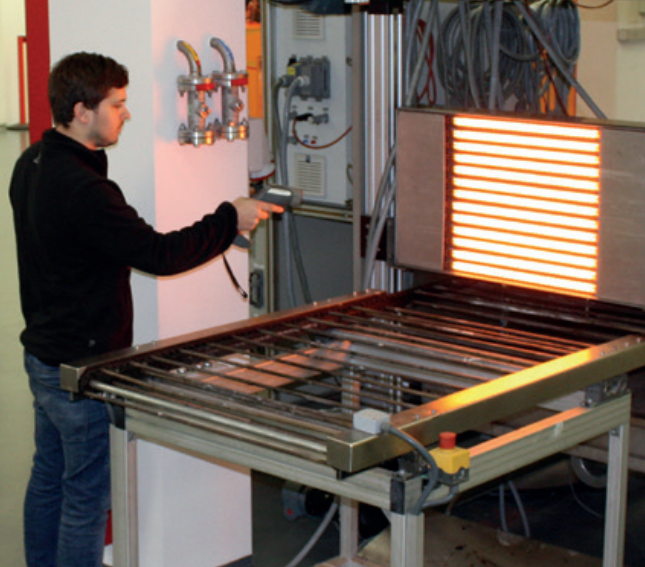
Stop the Shards: Keeping Your Wafers Clean When IR Lamps Fail
In a high-volume semiconductor line, a shattered IR lamp is a nightmare. It’s not just about the downtime—it’s the mess. When a quartz tube pops, it sends glass shards and metallic bits raining down right onto your wafers. It’s a total disaster. That’s why we build our clean room infrared heaters to catch the chaos before it ever touches your product. Dealing with the heat (and the pops) Most lamps give out because of electrical surges or uneven thermal expansion. To fight that, we use high-purity synthetic quartz. It handles rapid power cycling without developing those tiny micro-cracks that eventually lead to a break. But the glass is only half the battle. We also bake in precise power controllers to stop current spikes. Just a heads-up: make sure your PID tuning is tight. If the power pulses erratically, you’re just chewing through the life of your lamps. Keeping the debris locked away We don’t just hope the glass holds up. We added a secondary containment shield. Think of it as a safety net. If a tube does fail, the shield traps the debris so the particles stay far away from your wafers. We also looked at the small stuff. All the mounting brackets and wiring are made from non-outgassing materials. That way, when the lamp gets hot, you aren’t pumping volatile organic compounds (VOCs) into your clean room. The trade-offs Here is the honest part: adding shields and high-purity quartz makes the heater assembly a bit bulkier. It also puts a physical barrier between the heat and your target. Because of that, you’ll probably need to tweak your focal distance or bump up the wattage to keep your heat flux where it needs to be. My advice? Spec your power supply with about 10% overhead. It covers the shielding loss and gives you some breathing room.