
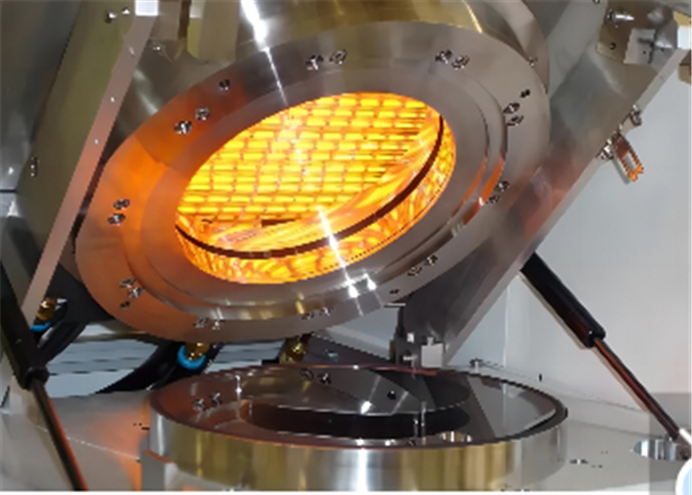
Why We Obsess Over Insulation in Vacuum IR Heaters
When you’re working in a vacuum, you’ve lost your safety net. Air normally acts as a natural insulator, but once it’s gone, the rules change. In that kind of environment, a tiny bit of leakage current isn’t just a technical glitch. It can trigger a massive arc that shreds your vacuum seal or ruins the part you’re working on. It’s a nightmare scenario.
We test every single tube. No exceptions.
Some shops do “batch sampling”—they test a few tubes and assume the rest are fine. We don’t do that. We put every single lamp tube through a HiPot (withstand voltage) and insulation resistance test before it ever leaves our door. Why? Because quartz is tricky. A microscopic crack or a tiny speck of contamination on an electrode can hide from a basic continuity check. But when we push the voltage to the limit, those “leakers” show their faces. It gives you peace of mind knowing the tube can handle the random voltage spikes of an industrial power grid without just giving up and shorting out.
The real-world side of electrical safety
High-wattage tubes get incredibly hot. That heat puts a lot of stress on the seals and connectors, which is why we’re picky about the dielectric materials we use. We want to make sure the current stays where it belongs and doesn’t jump to the housing. But here’s the thing: we can build the perfect tube, but the wiring is still your responsibility. If you use cheap terminals or leave the contact points dirty, it doesn’t matter how much we tested the tube. You’ll still get a localized arc.Keep your connections clean and high-quality, or you’re just inviting trouble.
Stopping the downtime disaster
If you’re running a multi-lamp array, one bad tube can kill your entire vacuum line. Swapping out a burnt-out lamp is a pain, sure. But dealing with a short that fries your power supply? That’s a disaster that costs real money and time. We’ve built our testing process to take the gamble out of the equation. You get a component that actually does its job, so you can stop worrying about your gear and get back to work.