
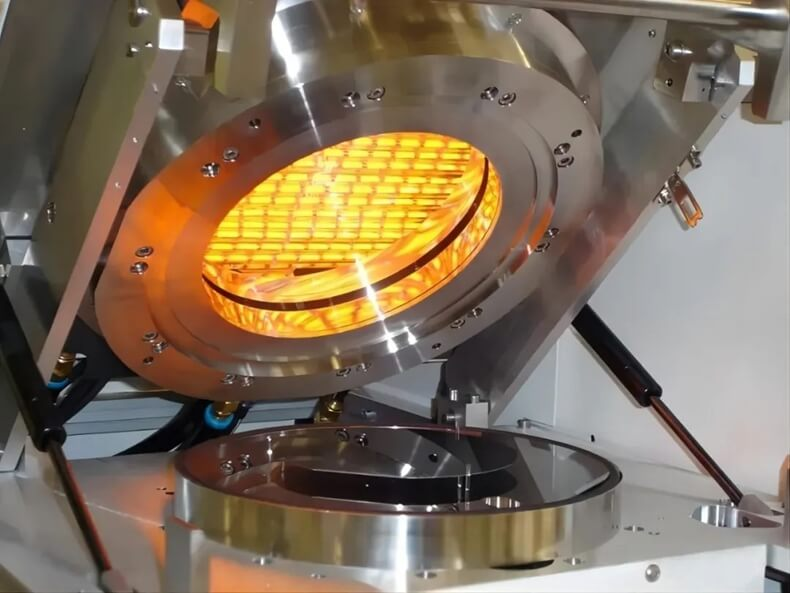
On the fab floor, you know how quickly things can go sideways. A soft bake that drifts even half a degree throws off critical dimension control and pushes photoresist profiles outside spec. When the line is set up to run 24/7, a heater failure doesn’t just kill one tool. It cascades through lithography, the track, and the bake modules, eating wafer starts and thermal budget you can’t afford to lose.
What matters, technically
We built this CE-approved semiconductor heater to keep wafer-level thermal discipline honest. Across the hot zone, it holds ±0.1°C steady-state uniformity, so every soft bake and hard bake lands on the same temperature curve, lot after lot. The element is tuned for fast stabilization with tight control, so you don’t overshoot and blow the photoresist processing window. Cleanroom compatibility isn’t a checkbox. The materials and finishes are chosen to keep particle generation low, meeting Class 1–100 expectations. In practice, that means fewer yield hits from contamination and a defect budget you can plan around.
Why it holds up on the line
This heater earns its keep under continuous operation. It’s built to run 24/7 with zero unplanned downtime, and life data show stable output over thousands of hours, so process repeatability stays intact. That thermal performance translates directly into fewer rework lots, tighter within-batch CD distribution, and consistent film thickness after bake. Energy use stays disciplined, too—efficient heat transfer and stable control prevent the waste that comes from chasing temperature with wide swings.
The practical details that make the difference
Integration is straightforward, but you still have to pay attention to the interface. Match voltage, connector type, and mounting tolerances to your tool, and make sure the thermal path you have matches the heater’s design so conduction is uniform. Expect a short ramp-up to reach steady-state control, and plan calibration intervals to keep that ±0.1°C spec over time.**Treat the heater like part of the process chamber.**Alignment, cleanliness, and good thermal contact are what turn the numbers into results on your wafers.