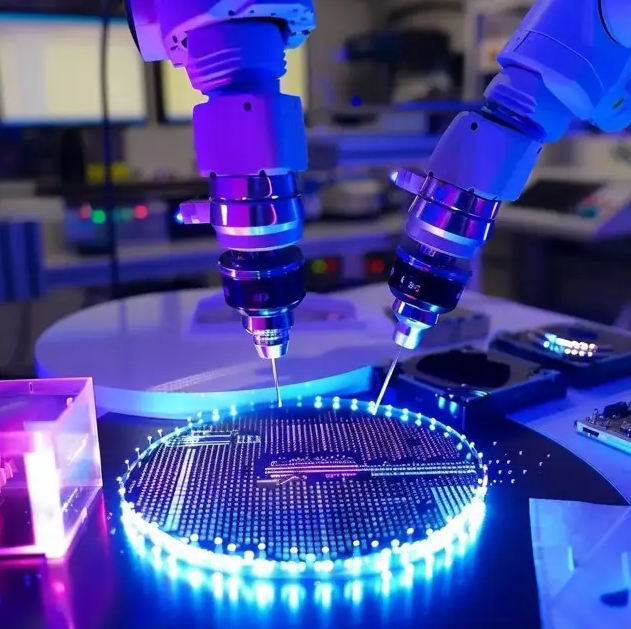
On the 300mm line, the dryer isn’t a nice-to-have. It’s the last thermal checkpoint before yield walks out the door. A few degrees of non-uniformity during photoresist bake, or a particle burst from an aging lamp, and repeatable lithography turns into scrap. We built our wafer drying lamp around one hard requirement: hold the wafer plane within ±0.1°C, without adding contamination. What matters under the hood We use a short-wave infrared emitter tuned for fast, localized heating, so temperature snaps to the setpoint without lag. A 300mm-optimized quartz window and reflector geometry give uniform flux across the full wafer, cutting the edge-to-center bias that shows up as CD variation. The system is cleanroom-compatible, with Class 1–100 materials and seals, and it’s built to run without generating particles. Closed-loop control keeps output repeatable, so the same thermal budget lands on every wafer, shift after shift. Why it plays in photoresist processing Soft bake and hard bake temperatures directly drive solvent removal, film stress, and ultimately critical dimension control. This lamp locks in the bake profile, which means fewer reworks and better line-of-sight yield. The fast response cuts cycle time without overshoot, and the low thermal mass keeps energy use tight. You get consistent results at the same setpoint, with fewer alarms, less maintenance, and less scrap. What to plan for on install This lamp is built for 300mm wafer handling and standard cleanroom integration, but the mechanical interface and utilities—power, cooling, exhaust—have to line up during install. Output stability depends on clean power and stable cooling water temperature, so commissioning should include a short-term drift check under full load. Block out a one-day integration window, then calibrate once to your process recipe.