
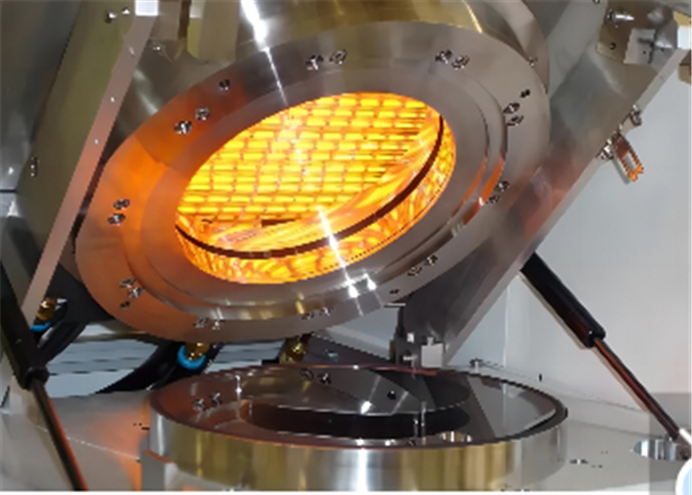
On a 200mm line, one wet step can quietly kill yield. Water left behind after cleaning shows up as a watermark on the photoresist, and then a soft bake drift pushes critical dimension control out of spec. You can’t paper this over with operator tweaks—what you need is a drying module that behaves the same, shift after shift. What matters under the hood Our 200mm wafer drying module is built around controlled thermal delivery and contamination control. Temperature uniformity across the wafer is held within ±0.1°C, so soft bake and hard bake profiles stay consistent lot to lot. The system fits cleanroom classes 1–100 and is engineered for zero particle generation, supporting the tight particle count targets we live by in lithography. In 24/7 operation, the design aims for zero unplanned downtime, with service life measured in tens of thousands of hours. Repeatability isn’t a talking point—it’s the baseline. Why it fits the floor This module slots straight into 200mm processing, from post-clean drying to photoresist bake steps. Tight thermal control cuts photoresist defects tied to thermal budget excursions, and consistent drying removes the variability that drives rework. The payoff: fewer scrap lots, higher machine utilization, and line-of-sight on critical dimensions that actually stays stable. We keep energy use in check without sacrificing setpoint accuracy, so operating cost stays predictable. The practical details Installation has to match the exhaust and vibration constraints of the wet bench or track interface. The module performs within spec when it’s on a clean, stable power source, and preventive maintenance—filter checks and sensor calibration—keeps long-term drift negligible. Plan the maintenance window. It’s small, but it’s non-negotiable.