

Why we use Infrared Curing for Lead-Free Semiconductors
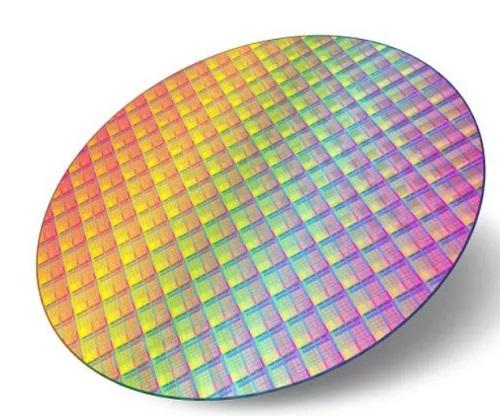
When you’re building biosensors, you’re walking a tightrope. You need enough heat to cure your adhesives and polymers, but if you go overboard, you’ll fry the biological parts of the sensor. That’s why we stick with infrared (IR) lamps. Instead of heating up a whole room of air just to get a part warm, IR sends energy straight into the material. It’s direct. It’s efficient. And it means we don’t have to run those massive, power-hungry convection ovens that just waste electricity. The trick to lead-free drying Old-school drying usually relies on chemical catalysts or blasting things with hot air, which often lets out nasty organic compounds (VOCs). IR is different. It uses specific wavelengths to kickstart polymerization almost instantly. Because the energy hits the substrate and vibrates the molecules into a bond right away, you don’t need those heavy metal stabilizers to keep the cure rate under control. It’s just a cleaner way of doing things. Getting the temperature just right We set these lamps up to pack a lot of heat into a tiny space. By tweaking the wattage and the distance from the sensor, you can hit that exact glass transition temperature (Tg) your polymer needs. The best part? The ramp-up is nearly instant. You’re at temperature in seconds, not hours. No more sitting around waiting for an oven to warm up while the power meter keeps spinning. A few things to watch out for Now, it’s not all magic. High-intensity IR lamps get incredibly hot at the emitter. If you don’t get your cooling fans and shielding right, you’re going to have a problem. If the housing isn’t vented properly, that heat just soaks back into your electronics. Before you know it, your sensor calibration starts drifting, and you’re back to square one. Making it work in the cleanroom If you’re still using forced-air setups, switching to IR is pretty easy. Since there’s no air blowing around, you aren’t accidentally tossing dust particles onto your wafers. You get a sterile, lead-free process that checks all the environmental boxes, and you don’t have to slow down your production line to get it.